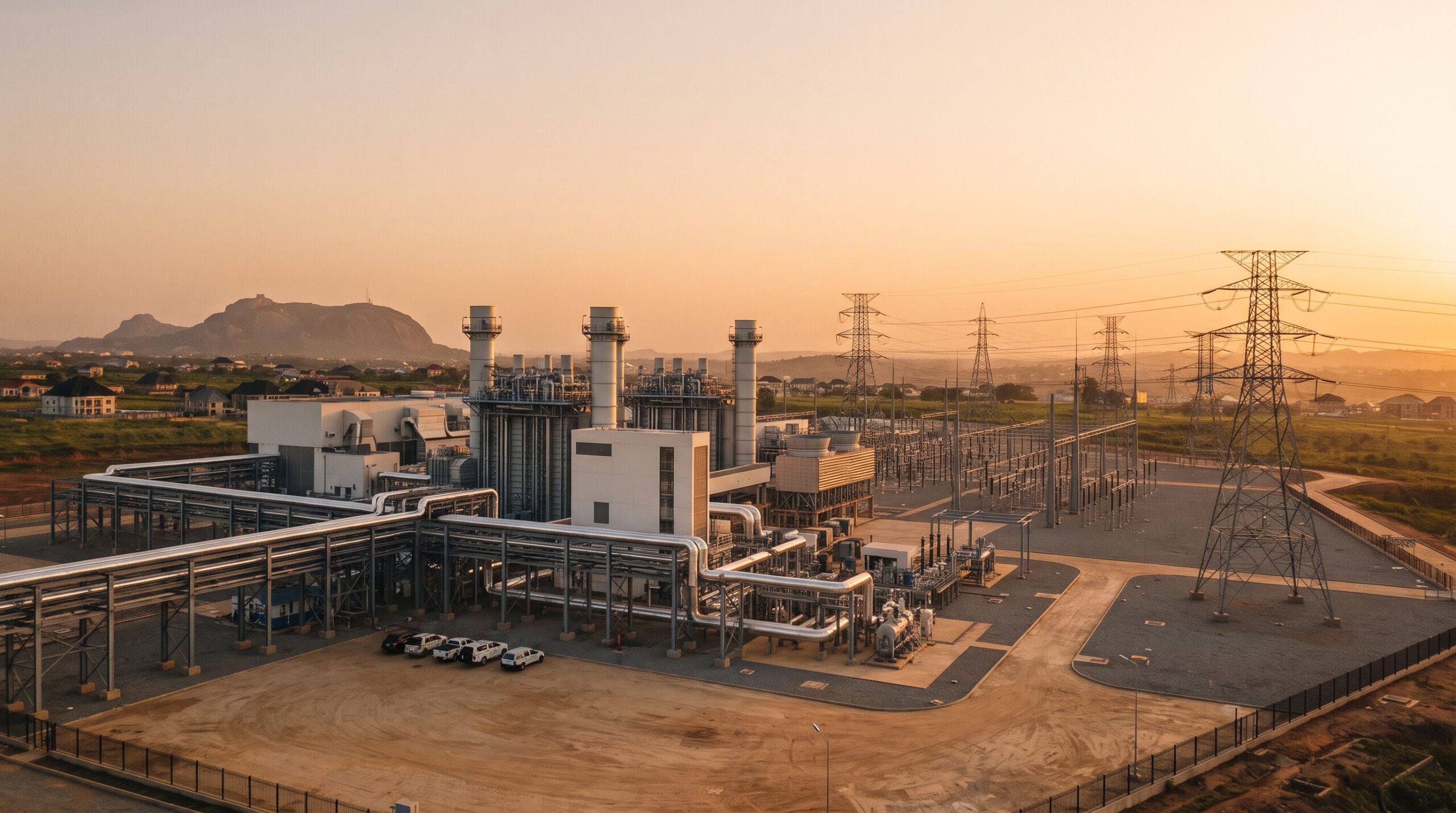
For over a decade, the Nigerian Electricity Supply Industry (NESI) has operated under the shadow of a crippling financial paradox. Nigeria holds some of the largest proven natural gas reserves on the African continent, yet its thermal power plants routinely struggle to secure reliable gas feedstock. At the same time, electricity generation companies (GenCos) have accumulated trillions of naira in unpaid invoices for power already generated and fed into the national grid, creating a circular debt crisis that starves the entire value chain of working capital.
In late November 2026, the Federal Government unveiled a comprehensive strategy aimed at breaking this cycle once and for all. Speaking on national television and in subsequent policy briefings, the Minister of Power, Joseph Tegbe, outlined a two-pronged intervention designed to extinguish legacy power sector debts by 2027 without passing fresh tariff shocks onto everyday consumers. The blueprint rests on two major pillars: negotiating downward adjustments to domestic gas prices for power generation, and introducing a creative fiscal netting model that offsets government debts against royalties and corporate income taxes owed by energy producers.
This policy pivot marks one of the most pragmatic attempts yet to reconcile fiscal reality with sector survival. Rather than relying exclusively on scarce cash allocations from the federal budget or continuous sovereign bond issuances, Abuja is attempting to use accounting offsets and domestic resource pricing as structural levers. Understanding whether this model can truly rescue Nigeria’s power sector requires examining the origins of the debt mountain, the mechanics of the new repayment structure, the intense debate surrounding gas pricing, and the operational risks that still lie ahead.
The Anatomy of Nigeria’s Power Sector Debt Crisis
To appreciate why a new repayment mechanism became unavoidable, one must look at how the liquidity deficit built up across the electricity value chain. Since the privatization of generation and distribution assets in November 2013, the Nigerian power market has suffered from a persistent gap between the actual cost of producing electricity and the tariffs collected from end users.
Between February 2015 and March 2025, unpaid invoices owed to generation companies ballooned to an initial estimated claim of roughly 6 trillion naira. This accumulation did not happen in a vacuum. Several structural flaws compounded the shortfall year after year:
-
Tariff Shortfalls and Subsidy Accumulation: For years, retail electricity tariffs remained frozen below cost-reflective levels to shield households and small businesses from macroeconomic inflation. While the government committed to covering the difference through tariff shortfall subsidies, actual cash releases lagged far behind monthly market invoices.
-
Aggregate Technical, Commercial, and Collection (ATC&C) Losses: Electricity Distribution Companies (DisCos) struggled with high energy theft, outdated distribution networks, and a massive metering gap. Because DisCos could not collect full revenues for the power delivered to them, they remitted only a fraction of their obligations to the Nigerian Bulk Electricity Trading Plc (NBET).
-
Foreign Exchange Volatility: Gas supply contracts and power plant maintenance agreements are heavily indexed to the United States dollar. As the naira experienced sharp depreciations over the past decade, the local currency cost of servicing gas invoices and spare parts multiplied, widening the gap between naira collections and dollar-denominated obligations.
-
Upstream Gas Arrears: Because GenCos were not receiving full payment from NBET and bilateral market participants, they defaulted on payments to gas suppliers and gas transportation companies. Upstream producers responded by curtailing gas supply to thermal plants or demanding upfront bank guarantees, leaving thousands of megawatts of installed generation capacity stranded.
When the current administration took stock of the crisis, it recognized that paying down 6 trillion naira in cash while simultaneously funding healthcare, education, agriculture, and transport infrastructure was fiscally impossible. Through extensive verification and commercial negotiations with the major power producers, the Federal Government successfully reconciled and negotiated the legacy debt figure down from 6 trillion naira to 3.3 trillion naira.
Over an 18-month period leading up to November 2026, the government disbursed 1.23 trillion naira toward this negotiated obligation, utilizing a mix of budgetary releases and capital market instruments such as the 729 billion naira Series 2 bond launched under the Presidential Power Sector Debt Reduction Programe. That leaves an outstanding balance of approximately 2.07 trillion naira to be cleared before the 2027 deadline.
Clearing over 2 trillion naira within a single calendar cycle requires financial engineering that goes beyond conventional treasury disbursements. Relying purely on fresh borrowing would inflate public debt service costs, while printing money or draining foreign reserves would undermine broader macroeconomic stabilization gains.
Drawing on his background as a seasoned accountant and former head of KPMG in Africa, Minister Joseph Tegbe introduced a straightforward yet transformative principle: fiscal netting. As he explained during policy engagements in November 2026, it makes little administrative or financial sense for the Federal Government to collect statutory taxes and royalties from energy companies with one hand while struggling to raise cash to pay those exact same corporate groups with the other.
How Fiscal Netting Works in Practice
The proposed repayment model operates as a structured tri-party or bilateral accounting reconciliation between the Federal Government, the power generation companies, and their affiliated upstream gas suppliers or parent conglomerates:
-
Gas Royalty Offsets: Many major power generation entities in Nigeria are either integrated with upstream oil and gas producers or owe substantial gas supply arrears to producers that pay statutory royalties to the Nigerian Upstream Petroleum Regulatory Commission (NUPRC) and the Federation Account. Under the proposed mechanism, verified debt owed by the government to GenCos can be credited directly against royalty obligations due to the state.
-
Corporate Income Tax (CIT) Credits: Power generation companies and their parent entities accrue annual Corporate Income Tax liabilities payable to the Federal Inland Revenue Service (FIRS) or the Nigeria Revenue Service. By allowing GenCos to offset portions of their confirmed legacy receivables against current and future CIT obligations, the government extinguishes sovereign liabilities without needing immediate cash liquidity.
-
Inter-Company Debt Clearing: Because GenCos owe gas producers billions of naira for past deliveries, a tax or royalty credit granted to an upstream supplier on behalf of a GenCo simultaneously wipes out the GenCo’s debt to the gas supplier and the government’s debt to the GenCo. This single ledger entry cleans up three balance sheets at once.
Why GenCos Are Open to the Arrangement
According to the Ministry of Power, initial negotiations with major generation companies have yielded broad agreement on this approach, provided the legal and accounting frameworks are transparent and binding. For GenCos, carrying multi-billion-naira receivables on their balance sheets for years creates severe audit complications, forces them to book heavy impairment provisions, and restricts their ability to raise commercial bank loans for turbine overhauls.
Even though a tax or royalty offset does not immediately put liquid cash into a company’s bank account, it directly preserves cash that the company would otherwise have had to remit to tax authorities. In corporate finance terms, a dollar of avoided tax outflow is functionally identical to a dollar of cash inflow, provided the company is profitable enough to generate tax liabilities or carries statutory royalty obligations.
Fiscal Implications for the Federation Account
While fiscal netting solves an acute cash-flow headache for the federal treasury, it carries subtle intergovernmental implications that policymakers must manage carefully. Taxes such as Corporate Income Tax and mineral royalties normally flow into the Federation Account, where revenues are shared vertically among the Federal Government, the 36 state governments, and the 774 local government areas according to constitutional revenue allocation formulas.
If substantial sums of CIT and royalties are netted off at the source to settle power sector obligations, total cash inflows into the Federation Account will dip proportionally. To prevent friction with subnational governments at the Federation Account Allocation Committee (FAAC), the Federal Ministry of Finance and the Budget Office will need to ensure transparent accounting, potentially treating the netted amounts as federal equity contributions or subnational deductions tied to historical electricity subsidies enjoyed by states.
The Gas Pricing Debate: Comparative Advantage vs. Upstream Economics
Alongside debt clearance, the second pillar of the government’s strategy addresses the root cause of future debt accumulation: the high cost of natural gas used to fire thermal power plants. Over 80 percent of Nigeria’s grid-connected electricity comes from gas-fired thermal stations. Consequently, the price of natural gas is the single largest determinant of the wholesale cost of electricity.
Currently, the regulated base price for natural gas supplied to the domestic power sector under the Domestic Gas Delivery Obligation (DGDO) hovers between 2.13 dollars and 2.18 dollars per thousand cubic feet (Mcf), following downward adjustments from earlier benchmarks. Despite this figure representing one of the lowest regulated benchmarks in a decade, the Ministry of Power is actively engaging the Nigerian National Petroleum Company Limited (NNPC Ltd) and upstream operators to push the price even lower for domestic power generation.
The Government’s Argument: Leveraging National Endowment
Minister Tegbe’s argument for lower gas prices is rooted in economic nationalism and comparative advantage. Nigeria possesses over 200 trillion cubic feet of proven gas reserves, much of which is still flared or reinjected due to inadequate domestic processing and pipeline infrastructure. From the government’s perspective, the Nigerian state owns the underlying hydrocarbon resource.
“Because we own this gas; it is our comparative advantage. And if we want to give power to Nigerians, let us use what we have to get what we want.” — Joseph Tegbe, Minister of Power
By lowering the feedstock price charged by NNPC Ltd and domestic suppliers to GenCos, the government aims to achieve three immediate outcomes:
-
Prevent New Tariff Hikes: The administration has explicitly ruled out any increase in end-user electricity tariffs heading into 2027. Lowering gas prices reduces the baseline generation cost per kilowatt-hour, shrinking the tariff shortfall that the government would otherwise have to subsidize.
-
Improve Plant Dispatch and Capacity Utilization: Cheaper gas enables thermal GenCos to generate more megawatts within existing revenue envelopes, boosting power availability for homes, manufacturers, and commercial clusters.
-
Stop the Debt Cycle from Restarting: Clearing 3.3 trillion naira in legacy debt achieves nothing if current monthly invoices continue to go unpaid. Bringing gas costs in line with what the market can actually pay ensures that post-2027 transactions remain cash-neutral and sustainable.
The Upstream Industry’s Counter-Perspective
While the logic of cheaper gas for domestic electricity is compelling from a consumer and macroeconomic standpoint, upstream oil and gas producers view further price cuts with deep skepticism. International Oil Companies (IOCs) and indigenous independent producers operating in the Niger Delta face rising security costs, pipeline vandalism, aging field infrastructure, and high global interest rates for project financing.
Industry advocates, including voices aligned with the Decade of Gas initiative, have long argued that sustainable gas supply requires “cost-reflective gas pricing” and an eventual transition toward a willing-buyer, willing-seller commercial market. Their concerns center on clear economic realities:
-
Capital Allocation Competition: Developing non-associated gas fields requires billions of dollars in upfront capital expenditure for drilling, gas processing plants, and gathering pipelines. If regulated domestic power prices fall below the marginal cost of extraction and processing, investors will divert capital toward export-oriented Liquefied Natural Gas (LNG) projects or higher-paying domestic industrial customers such as fertilizer plants, cement factories, and petrochemical complexes.
-
The Risk of Supply Constriction: Artificially suppressing prices without compensating upstream producers can inadvertently worsen the very problem it seeks to solve. If producers lose money selling to GenCos at sub-economic prices, they may fulfill only the bare minimum of their statutory domestic obligations, leaving power plants hungry for molecules during peak demand periods.
-
NNPC Ltd’s Commercial Mandate: Under the Petroleum Industry Act (PIA) of 2021, NNPC Ltd was transformed into a commercially driven, profit-oriented limited liability company accountable to its shareholders. Asking NNPC Ltd to subsidize gas prices for power generation requires careful balancing so that the national oil company’s balance sheet and dividend remittances are not impaired.
Finding the Middle Ground
Reconciling the Power Ministry’s push for cheaper feedstock with upstream producers’ need for viable returns will require targeted compromises. One viable middle path involves leveraging associated gas that would otherwise be flared, offering accelerated capital allowances or royalty reductions specifically tied to domestic gas-to-power volumes, and utilizing NNPC Ltd’s equity gas share from Joint Venture (JV) operations where sunk infrastructure costs have already been amortized.
Protecting Consumers: Why Tariff Hikes Are Off the Table
A defining feature of the November 2026 policy announcement is the firm assurance that Nigerians will not face another round of electricity tariff increases to fund the debt clearance. Over the past two years, Nigerian households and businesses have absorbed significant cost-of-living adjustments following the removal of petrol subsidies, foreign exchange unification, and the introduction of Band A tariff adjustments for customers receiving 20 or more hours of daily supply.
Minister Tegbe emphasized that the administration’s immediate priority is to strengthen the physical and financial foundations of the electricity grid rather than burdening citizens with higher bills before service reliability improves. By combining fiscal netting with lower gas input costs, the government is essentially absorbing the restructuring burden on its own balance sheet and through state-affiliated energy entities rather than passing it to retail ratepayers.
Furthermore, ongoing metering initiatives are beginning to improve revenue collection without raising unit prices. Data from the sector indicates that DisCos connected over 1.27 million customers with meters within a 10-month span in 2026, narrowing the national metering gap to roughly 4.56 million customers. Better metering reduces estimated billing disputes, curbs commercial losses, and improves the cash remittance rate flowing back up the value chain to GenCos.
Structural Bottlenecks Beyond Debt and Gas
Even if the Federal Government successfully clears the remaining 2.07 trillion naira GenCo debt by 2027 and secures discounted gas supply agreements from NNPC Ltd, money and molecules alone cannot guarantee uninterrupted electricity. Three physical and institutional bottlenecks must be addressed concurrently for Nigerians to feel the impact in their homes and factories.
1. Transmission Grid Fragility and Wheeling Capacity
Nigeria’s national transmission network, managed by the Transmission Company of Nigeria (TCN), remains a critical choke point. While installed generation capacity exceeds 13,000 megawatts, the grid has historically struggled to wheel more than 4,500 to 5,500 megawatts reliably without experiencing voltage fluctuations or system collapses.
Recent grid expansion milestones, such as the commissioning of 480 megawatts of additional transmission capacity in Gombe in November 2026, demonstrate progress in regional grid reinforcement. However, completing ongoing projects under the Presidential Power Initiative (Siemens deal) and modernizing Supervisory Control and Data Acquisition (SCADA) systems remain essential so that extra power generated from cheaper gas can actually reach end users.
2. Distribution Network Under-Investment
Many DisCos operate aging transformers, overloaded feeders, and deteriorated overhead lines that frequently trip during rainfall or peak load hours. Even when generation increases and transmission lines carry the load, distribution networks often reject power because local substations lack the capacity to step down and distribute the electricity safely. Enforcing capital expenditure compliance among DisCos and encouraging state-level electricity markets under the Electricity Act 2023 are vital steps toward decentralizing and upgrading distribution infrastructure.
3. Pipeline Security and Vandalism
Gas pipelines running through the Niger Delta and onward to thermal plants in the southwest and north remain vulnerable to sabotage, illegal bunkering, and third-party interference. A single breach on the Escravos-Lagos Pipeline System (ELPS) or the Trans-Forcados pipeline can instantly knock out over 1,000 megawatts of power generation. Sustained security surveillance and community host-trust integration under the Petroleum Industry Act must accompany any pricing reform.
What Success by 2027 Looks Like for Key Stakeholders
If the Federal Government executes this blueprint effectively over the coming months, the ripple effects across Nigeria’s economy will be substantial.
Critical Risks That Could Derail the 2027 Target
While the strategy is coherent on paper, execution risks in Nigeria’s energy sector have historically been high. Policymakers must navigate four potential pitfalls to avoid falling short of the 2027 milestone:
-
Exclusion of Non-Tax-Paying Entities: Not every generation company or gas supplier has sufficient Corporate Income Tax or royalty liabilities to absorb hundreds of billions of naira in debt offsets within a single year. For companies with smaller tax profiles, the government will still need to rely on bond issuances or direct budget allocations, which must compete with other national priorities.
-
Inter-Agency Coordination Delays: Implementing fiscal netting requires seamless synchronization among the Ministry of Power, the Ministry of Finance, the Federal Inland Revenue Service, the Nigerian Upstream Petroleum Regulatory Commission, NNPC Ltd, and NBET. Bureaucratic delays in issuing tax credit certificates or reconciling audit figures could stall progress.
-
Legal and Audit Disputes Among Excluded Creditors: While the Ministry of Power noted that the largest and most critical GenCos participated in negotiating the 3.3 trillion naira settlement, smaller market participants or gas transporters who feel left out of the room could mount legal challenges or withhold services if their claims are not transparently integrated.
-
Macroeconomic Shocks: Sharp swings in global crude oil prices or unexpected exchange rate volatility could alter both the government’s fiscal headroom and the dollar cost of domestic gas production, requiring rapid recalibration of the pricing formula.
Conclusion
Nigeria’s power sector has spent more than a decade trapped in a cycle where unpaid bills starve gas producers, gas shortages cripple power plants, and unreliable electricity stunts economic growth. By combining a negotiated debt haircut with an innovative royalty and tax offset model, alongside targeted negotiations with NNPC Ltd to reduce domestic gas prices, the Federal Government has crafted a realistic pathway out of the financial gridlock.
Clearing the remaining 2.07 trillion naira debt by 2027 without raising consumer tariffs will test the administrative discipline of Nigeria’s economic and energy institutions. If executed with transparency, speed, and parallel investments in transmission and distribution infrastructure, this reform could finally transform Nigeria’s vast natural gas reserves from an underutilized resource into the reliable engine of national electrification.