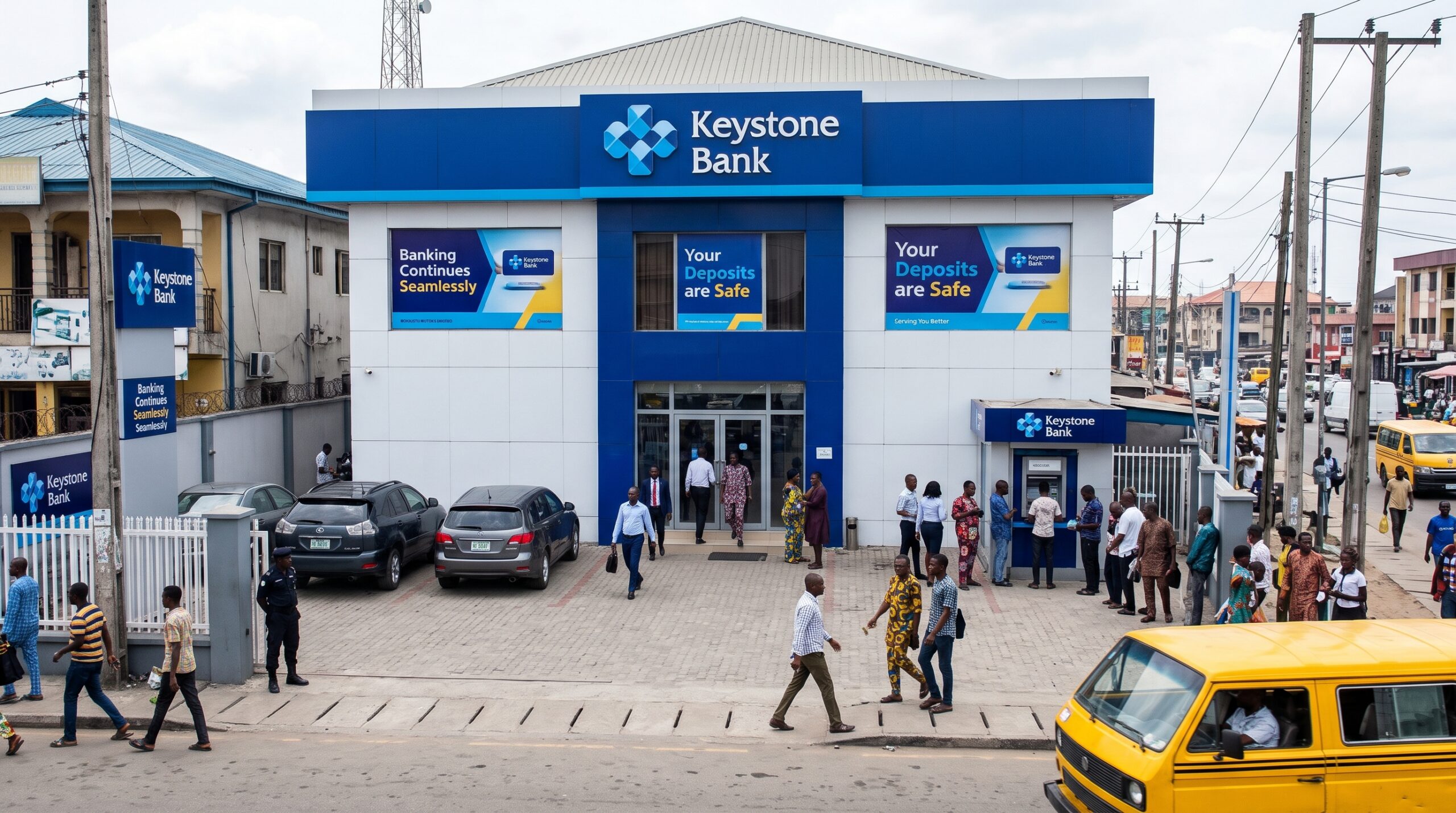
Nigeria’s banking sector experienced another major regulatory intervention on Thursday, November 26, 2026, when the Central Bank of Nigeria (CBN) announced the appointment of Mr. Murtala Mohammed as the Acting Managing Director and Chief Executive Officer of Keystone Bank Limited. The decision, which took immediate effect, removes Mr. Hassan Imam from the helm of the commercial lender after nearly three years of leading the institution through a period of intense ownership disputes, regulatory oversight, and nationwide banking recapitalization.
For depositors, corporate clients, and financial market observers, executive changes at a systemically important commercial bank always command immediate attention. Keystone Bank occupies a unique position in Nigeria’s financial architecture. Established out of the intervention in the defunct Bank PHB in 2011, the lender has spent the last fifteen years navigating shifts between state-backed bridge ownership, private acquisition, judicial asset forfeiture, and renewed federal control.
While the CBN kept its official announcement concise and focused on depositor reassurance, the leadership transition carries deep implications for corporate governance, recapitalization strategy, and operational continuity at Keystone Bank. Understanding what this appointment means requires examining the official statement from the regulator, the professional profile of Murtala Mohammed, the circumstances surrounding Hassan Imam’s exit, and the broader structural challenges facing the bank as 2026 draws to a close.
Inside the Central Bank of Nigeria’s Official Announcement
The leadership shakeup was formally communicated late on Thursday, November 26, 2026, through an official press release signed by Mr. Michael Akuka, the CBN’s Director of Corporate Communications and Investor Relations. In the statement, the apex bank confirmed that Murtala Mohammed would step in as Acting Managing Director and Chief Executive Officer of Keystone Bank Limited, replacing Hassan Imam with immediate effect.
To anchor the decision in statutory authority, the Central Bank explicitly invoked the powers conferred upon it by the Banks and Other Financial Institutions Act (BOFIA) 2020. Under BOFIA 2020, the CBN holds broad supervisory mandates to intervene in the management and board composition of licensed deposit money banks whenever it deems such action necessary to protect depositors, maintain public confidence, and preserve the soundness and stability of the Nigerian financial system.
Key highlights from the CBN’s directive and Keystone Bank’s subsequent management response include:
-
Immediate Effective Date: Murtala Mohammed assumed leadership duties on November 26, 2026, ensuring there was no vacuum at the top of the bank’s executive management.
-
Continuity of Operations: Both the CBN and Keystone Bank’s management emphasized that all branches, digital banking channels, automated teller machines, and corporate desks remain fully operational without disruption.
-
Safety of Customer Deposits: The regulator issued direct assurances to retail and institutional depositors that their funds remain completely safe and protected under existing regulatory frameworks.
-
Silence on Specific Exit Triggers: Consistent with standard central banking practice in Nigeria during sensitive interventions, the CBN did not disclose specific operational grievances or internal triggers behind Hassan Imam’s removal, framing the change purely around financial system stability and governance.
In a parallel corporate statement released shortly after the apex bank’s notice, Keystone Bank Limited acknowledged the leadership transition, expressed appreciation to Hassan Imam for his service and contributions during his tenure, and pledged full institutional support for Murtala Mohammed as he steers the bank forward.
Who Is Murtala Mohammed? Profile of the New Acting CEO
When a financial regulator appoints an acting chief executive to oversee a commercial bank undergoing structural transformation, the individual’s technical background and temperament become critical indicators of what lies ahead. Murtala Mohammed steps into the corner office at Keystone Bank with a profile rooted in traditional banking discipline, financial accounting, and strategic execution.
According to corporate disclosures accompanying his appointment, Mohammed brings more than two decades of hands-on experience across Nigeria’s banking and financial services industry. Over the course of his career, he has built a reputation around three core operational pillars:
-
Financial Rigor and Accounting Governance: Mohammed is a qualified member of the Institute of Chartered Accountants of Nigeria (ICAN) and holds a Master of Business Administration (MBA) in Finance and Investment. In an environment where balance sheet integrity, asset quality, and regulatory compliance are under intense scrutiny, having a chartered accountant at the helm signals a strong emphasis on internal controls and clean financial reporting.
-
Strategic Execution and Business Development: Throughout his twenty-plus years in financial services, Mohammed has held senior leadership responsibilities focused on driving commercial growth, optimizing operational efficiency, and executing institutional turnarounds.
-
Institutional Stabilization: Unlike founders or long-term retail brand builders, an acting chief executive appointed by the Central Bank is typically tasked with steady-handed stewardship. Mohammed’s mandate centers on maintaining liquidity, enforcing risk management frameworks, keeping staff morale steady, and aligning the bank’s balance sheet with federal shareholder expectations.
His designation as “Acting” Managing Director and Chief Executive Officer is also noteworthy. In Nigerian banking governance, an acting appointment allows the regulator and the sovereign shareholder to install experienced leadership immediately while retaining flexibility regarding long-term board constitution, potential strategic investors, or final recapitalization structures.
The Tenure and Exit of Hassan Imam
To appreciate the context of November 2026’s leadership change, one must trace the turbulent path of Hassan Imam’s tenure at Keystone Bank. Imam was originally appointed as Managing Director and Chief Executive Officer in January 2024, alongside Executive Director Chioma A. Mang, during one of the most dramatic regulatory sweeps in modern Nigerian banking history.
At the start of 2024, following the findings of a special investigation into the Central Bank of Nigeria and related financial institutions, the CBN dissolved the boards and executive management teams of three commercial banks: Union Bank of Nigeria, Keystone Bank Limited, and Polaris Bank. Those interventions were triggered by corporate governance infractions, non-compliance with regulatory directives, and concerns over share acquisition processes.
Hassan Imam arrived at Keystone Bank from Fidelity Bank, where he had served as an Executive Director overseeing the North Directorate, bringing extensive retail and commercial banking pedigree. During his nearly three years in charge from January 2024 to November 2026, Imam had to manage an extraordinarily complex operating environment:
-
Navigating Ownership Uncertainty: For over a year into his tenure, the ultimate legal ownership of Keystone Bank was locked in high-stakes litigation between the Federal Government and the bank’s previous private owners. Operating a commercial bank while its equity ownership is contested in court creates natural hesitation among large corporate depositors and international correspondent banks.
-
Maintaining Customer Confidence: Despite headlines surrounding anti-corruption investigations into the bank’s historical acquisition, Imam’s management team worked to keep retail branches functioning smoothly, modernize digital mobile apps, and prevent panic withdrawals.
-
Managing Macroeconomic Headwinds: Between 2024 and 2026, Nigerian banks operated amid high benchmark interest rates set by the CBN to combat inflation, alongside foreign exchange market reforms and rising operational costs for branch power and technology infrastructure.
While Keystone Bank’s official statement thanked Imam for his leadership and wished him well in his future endeavors, his departure on November 26, 2026, underscores that the regulator and the Federal Government believe a fresh executive perspective is needed for the next phase of the bank’s evolution.
Keystone Bank’s Ownership Journey: From Bank PHB to Federal Control
Keystone Bank’s corporate history is one of the most eventful in West African finance, and understanding its current status requires looking at how the Federal Government became its sole shareholder.
| Milestone Period |
Key Corporate & Regulatory Event |
Ownership & Governance Status |
| August 2011 |
CBN revokes the operating license of Bank PHB due to severe undercapitalization and liquidity distress; establishes Keystone Bank as a bridge bank. |
Wholly owned by the Asset Management Corporation of Nigeria (AMCON) on behalf of the state. |
| 2017 to 2023 |
AMCON divests its shareholding to a consortium of private investors (Sigma Golf Nigeria Limited and Riverbank Investment Resources Limited). |
Operated as a privately owned commercial bank under private board oversight. |
| January 2024 |
CBN dissolves the bank’s board and executive management over governance infractions; appoints Hassan Imam as MD/CEO. |
Private equity ownership contested; executive management placed under CBN-appointed leadership. |
| February 11, 2025 |
Lagos State Special Offences Court orders the final forfeiture of 6.3 billion ordinary shares to the Federal Government. |
Fully owned by the Federal Government of Nigeria following judicial forfeiture. |
| November 26, 2026 |
CBN appoints Murtala Mohammed as Acting MD/CEO, replacing Hassan Imam. |
Federal Government ownership; supervised directly by CBN with new acting executive leadership. |
The turning point that defines Keystone Bank’s current reality occurred on February 11, 2025. Following legal action initiated by the Federal Government through the Economic and Financial Crimes Commission (EFCC), the Lagos State Special Offences Court sitting in Ikeja ordered the final forfeiture of 6.3 billion ordinary shares previously held by the bank’s former shareholders. The court ruled on allegations that ₦20 billion belonging to the Asset Management Corporation of Nigeria (AMCON) had been improperly utilized to acquire the bank’s shares.
With that judicial order, full equity ownership of Keystone Bank reverted directly to the Federal Government of Nigeria. This created a distinct dual-oversight dynamic: the Federal Government sits as the sole equity shareholder responsible for capital solutions, while the Central Bank of Nigeria acts as the statutory regulator enforcing prudential standards under BOFIA 2020.
The Recapitalization Imperative and Strategic Priorities for 2027
The timing of Murtala Mohammed’s appointment in late November 2026 is deeply connected to the broader transformation sweeping through Nigeria’s banking industry. Since the Central Bank of Nigeria announced its landmark banking sector recapitalization program in 2024, commercial lenders across the country have been racing to shore up their minimum paid-up share capital (excluding retained earnings) to meet strict tier-based thresholds: ₦500 billion for international authorization, ₦200 billion for national authorization, and ₦50 billion for regional authorization.
As a national commercial bank owned by the Federal Government following the February 2025 court forfeiture, Keystone Bank faces a unique capital resolution pathway. Unlike publicly listed tier-one banks such as Access Holdings, Zenith Bank, GTCO, or UBA that can raise hundreds of billions of naira through rights issues and public offers on the Nigerian Exchange (NGX), Keystone Bank’s capital restructuring rests squarely with the Federal Government as owner and the CBN as regulator.
As Murtala Mohammed settles into his role as Acting CEO, four immediate priorities will define his agenda:
1. Finalizing the Capital Resolution Framework
Whether the Federal Government opts to inject fresh sovereign equity, warehouse the institution for a structured sale to credible institutional investors, or pursue a strategic merger, the bank’s books must be pristine. Mohammed’s background as an ICAN fellow and finance specialist positions him to oversee rigorous balance sheet cleanups, accurate loan-loss provisioning, and transparent valuation readiness.
2. Strengthening Risk Management and Asset Quality
In a high-interest-rate environment, Nigerian commercial banks face elevated credit risk across sectors such as manufacturing, oil and gas, telecommunications, and general commerce. Preventing non-performing loans (NPLs) from eroding capital buffers is essential. Under Mohammed, Keystone Bank is expected to tighten credit underwriting standards, accelerate recovery of legacy bad loans, and focus on high-grade, short-term trade finance and treasury instruments.
3. Deepening Digital Banking and Retail Deposit Mobilization
Low-cost retail deposits are the lifeblood of any resilient commercial bank. Keystone Bank has historically maintained a strong retail footprint across major commercial centers in Lagos, Abuja, Port Harcourt, Kano, and Kaduna. Sustaining investments in its mobile banking platform, USSD channels, and merchant Point-of-Sale (POS) networks will be vital to keeping current and savings account (CASA) ratios healthy and reducing the bank’s overall cost of funds.
4. Reinforcing Corporate Governance and Regulatory Compliance
Because Keystone Bank has experienced multiple regulatory interventions over the past fifteen years, strict adherence to CBN corporate governance codes is non-negotiable. Establishing clear reporting lines, transparent procurement processes, and proactive compliance with anti-money laundering (AML) and Know-Your-Customer (KYC) rules will help restore the bank’s institutional standing among domestic and international counterparties.
What Customers and Businesses Should Know Right Now
Whenever news breaks that the Central Bank of Nigeria has replaced the chief executive of a commercial bank, everyday account holders naturally wonder whether their money is safe or if they need to rush to a branch. Based on the statutory framework and the explicit assurances issued by both the CBN and Keystone Bank on November 26, 2026, customers have no reason for alarm.
For individuals, small business owners, and corporate treasurers banking with Keystone Bank, several practical realities apply:
-
Uninterrupted Access to Funds: All customer deposits remain intact and accessible. Branch teller services, mobile app transfers, debit card transactions, and international trade settlements continue to operate normally.
-
Full Regulatory Backing: A CBN-mandated executive transition is a preventive and supervisory governance measure, not a liquidation or license revocation. In fact, direct CBN oversight and Federal Government shareholding effectively provide an implicit sovereign backstop for depositors.
-
Existing Contracts and Loan Facilities Remain Valid: Borrowers with active loan facilities, overdrafts, or asset financing agreements with Keystone Bank remain bound by their existing repayment schedules. Similarly, fixed deposit certificates and treasury bills held through the bank retain their agreed terms and yields.
-
Vigilance Against Fraudsters: Periods of leadership transition often attract opportunistic scammers sending fake SMS alerts or phishing links claiming customers must “revalidate” their accounts due to a new CEO. Account holders should ignore unsolicited messages requesting PINs, passwords, or BVN details and rely strictly on verified Keystone Bank channels.
Broader Implications for Nigeria’s Banking Sector
The removal of Hassan Imam and appointment of Murtala Mohammed send a broader signal across Nigeria’s financial services industry. Under the current leadership of the Central Bank of Nigeria, regulatory tolerance for governance drift, slow strategic execution, or misalignment with prudential benchmarks remains exceptionally low.
Over the past two years, the apex bank has demonstrated a willingness to act decisively across both private and state-owned financial institutions. By exercising its powers under BOFIA 2020 without hesitation, the CBN reinforces the principle that executive tenure in Nigerian banking is strictly conditional upon regulatory satisfaction and institutional soundness.
Furthermore, Keystone Bank’s trajectory serves as an important case study in how sovereign-owned financial institutions are managed in Africa’s largest economy. With the Federal Government holding 100 percent of the forfeited shares since February 2025, market analysts will be watching closely in 2027 to see how Abuja and the CBN resolve the bank’s long-term ownership. A successful stabilization under Murtala Mohammed could pave the way for a transparent re privatization process that attracts strong domestic or international banking capital, permanently returning Keystone Bank to private-sector competitiveness.
For now, the mandate in the executive suite is clear. Murtala Mohammed steps into Keystone Bank not merely as a caretaker, but as a seasoned financial administrator charged with protecting depositor trust, fortifying internal controls, and positioning the institution for a decisive new chapter in Nigerian banking.